How do you start your day?
What if ‘Eating The Frog’ is not the answer?
Do you remember how all our childhood board games came with a written set of rules? Someone had devised them, written them down and got them published so that anyone could consult them at any time and immediately understand what to do.
I am at a life stage where conversations with friends often include our recent discovery of labels for our not being so ‘normal’. We share the always having felt slightly at odds with, well, most things, like someone hid the rules of the game. Being brought up near Oxford, as school kids we occasionally found ourselves in settings where psychology researchers came and played games with us. One involved going into a room and figuring out the cultural rules – finally a use for all the hypervigilance and mirror matching experience, because that was an exercise I could do. As could many of my friends. Birds of a feather n’all…
Anyway, I digress. Over New Year during a ‘comparing our quirks and cute eccentricities’ conversation, the topic of task lists and approaches to work came up. I was asked if I use task lists. ‘Yes I do’ I said, ‘I love spending time organising them. But then I completely ignore them. But, it’s a great way to get started’.
Can you relate?
(There are usually two types of people, neither are wrong.)
I recalled that conversation whilst watching the BBC coverage of the Winter Olympics one evening. Clare Balding (the experienced sports commentator) and Chemmy Alcott (the retired downhill skier) were discussing what athletes do just before they compete. We see them visioning their way through their runs and getting into the zone immediately before their run, but what about before that, in the waiting time? Clare was surprised about the random things they get up to. Tom Daley famously knits, for instance. Chemmy said she used to juggle as it sharpened her mind and took her entire focus, leaving no capacity for thinking about her run. Apparently, dwelling on thoughts about hurtling down an icy mountainside at 90mph isn’t very helpful… who knew?
Another evening, they were showing videos of what other athletes do. The Austrians were playing table tennis as a team, walking around the table, taking it in turns to take the shot. It was very impressive. And quite mesmerising. Tennis players and Formula 1 drivers do the catching of dropping (tennis) balls thing, or tapping lights, whack-a-mole style, to sharpen their already lightening fast reflexes.
I find elite athletes fascinating. They aren’t normal, obviously, and their single minded pursuit of results is not necessarily healthy for us mere mortals (playing tournaments with broken legs, for instance), but their ideas and their tips can be insightful.
They have often spent years understanding mindset, usually because the biggest obstacle to success is their heads, rather than their competitors. Let’s borrow some stuff from them.
Getting going on a work session: you have things to do...
How do you go about it?
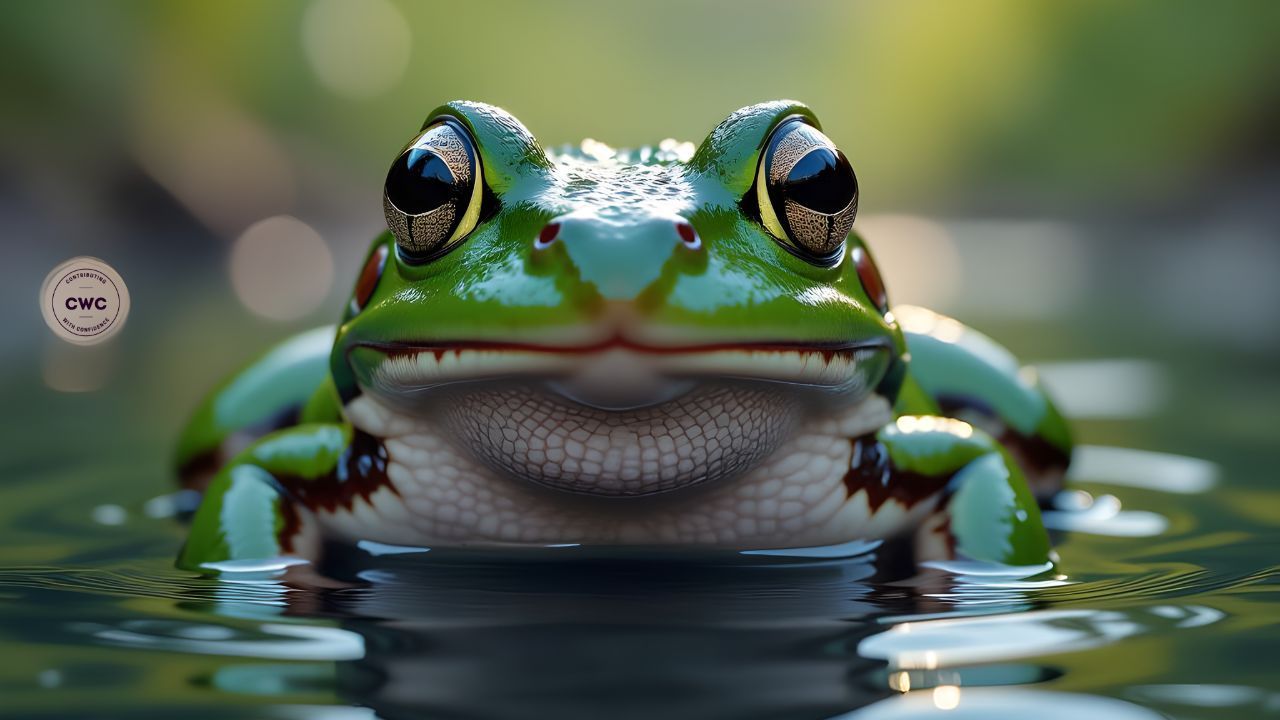
Q. Do you ever find chewing on a frog an encouraging opening act? I know for some that is THE tactic. Personally, I find generating that level of resistance at the outset of a busy workday quite abusive and unethical.
Yes, seriously. Why do we consider it acceptable to attack ourselves?
I find it more helpful to sidle up to the harder things, sneaking up on them and pouncing from a place of momentum, then celebrating the conquest.
What I usually find is that once done there is a sense of ‘was that it?!’
These things often seem bigger in our heads. Perhaps we aren’t so very different from elite athletes after all?
Writers often set a timer for three minutes and just write an answer to a simple question. Life drawing classes usually open with a quick draw. In both cases it is the act, rather than the results that matter. This is about loosening mental tightness, because that’s what will slow us down.
The activity of rummaging about with a task list is my way of getting going and loosening up. It’s also a way of thinking in 4D, about what matters and noticing how I am in relation to my work. One of the other online Time Management / Productivity coaches (although I don’t think either of us choose those titles) talks about a lily pad task list. The first time I heard it, it was a major ‘aha!’ moment.
Noticing how you are. That’s vital.
Obviously, there are necessary tasks that have to be done, but if you are running your own business the reality is not a nice linear task list, but a smorgasbord. An all you can eat buffet of possibilities, like a huge selection box of chocolates. You know you can’t eat all of it today, even though you know you mainly love them all, but which to choose? It depends on the mood. There is a time and a place for the strawberry cream, but not on a hard centre day. As humans comprised mainly of water, we are cyclic creatures affected by diurnal variations, cycles of the moon and seasons of the year. We are even affected by the modern synthetic cycles of the working week, financial year end and so on. Our moods shift, we get buffeted by external events, by interactions with other humans and just the daily stuff of human survival in the ‘developed’ world.
What we cannot be, is permanently productive. What can we be instead?
Sometimes we are totally up for calling others, reaching out, connecting, promoting our businesses, and at other times, we need to be quiet and more inward facing. Or we might be on fire with the strategic thinking, and yet the next day we can’t even anticipate what we might have for lunch, let alone make a decision about it. Perhaps we will be really receptive to new information, in a great state for reading and research. It makes sense then to be able to identify our tasks by qualities that suit how we might be on any given day. These are the lily pads. We can pick the lily pad that matches how we are and then work through those. Over a period of time it all mounts up into a glorious spectrum of completed projects and errands and becomes our personal (famously not built in a day) city of Rome.
You may have read or heard me talking about ‘The Art of The Possible’.
It is the basis for ethical and fair trade, the alternative to beating our wonderful creative, cyclic natures into submission and gaslighting ourselves whilst comparing ourselves to all the performative online presentations of perfect productivity, tech bro style. You know what happens to the worker bees? Yep, they drop mid flight, trouser pockets full of pollen. If people could work continuously in this way, then weekends, high days and holidays would not have been invented. Neither would the Sabbath have been mandated in the ancient written social records that are the religious scriptures. Let’s not forget, the broligarchy is founded on profits before people. This is not an attitude we can afford to adopt - our businesses are nothing without its people, primarily You.
How are you? What does ‘possible’ look like for you right now? What do you need? What gentle tasks can you use to limber up for whatever is next for you? Whatever it is, choose it with great intention and commit to it with the right energy. Once completed, celebrate and add it to a Tadaaaaa! list. And yes, jazz hands are totally appropriate – embodying positive steps, however tiny they might be is a critical step, especially if you too are in the process of sneaking up on a slippery, less pleasant task. Let the frogs live on in peace.
_____
If you’re running your own business and are tired of forcing yourself into someone else’s productivity rules, you might be interested in the way we work in “DO to BE”.
Focused sessions. Clear start points. Real breaks. No frog-eating required.